
Pest control contract for building managers in Brussels, communal areas and roof
Fix Nuisible supports Brussels building managers in the pest control management of their properties: rodent control in communal areas, bed bug treatment in cases of inter-apartment spread, and pigeon proofing for roofs. Each intervention is documented, coordinated with the relevant co-owners, and tracked in a file ready for the general meeting, in compliance with the obligations of a professional IPI-accredited building manager.

Problems a building manager cannot afford to let slide

An infestation spreading from one apartment to another
Bed bugs introduced into a third-floor apartment migrate to adjacent units via electrical sockets, service ducts, and wall gaps. Within a few weeks, an initial outbreak can contaminate three, four, or five apartments.
Every occupant blames their neighbour. The manager finds themselves at the centre of a conflict between co-owners for which they are not responsible, but which they must absolutely organise simultaneous treatment for, or risk the systematic recontamination of treated apartments.
Infested communal areas and the manager's civil liability
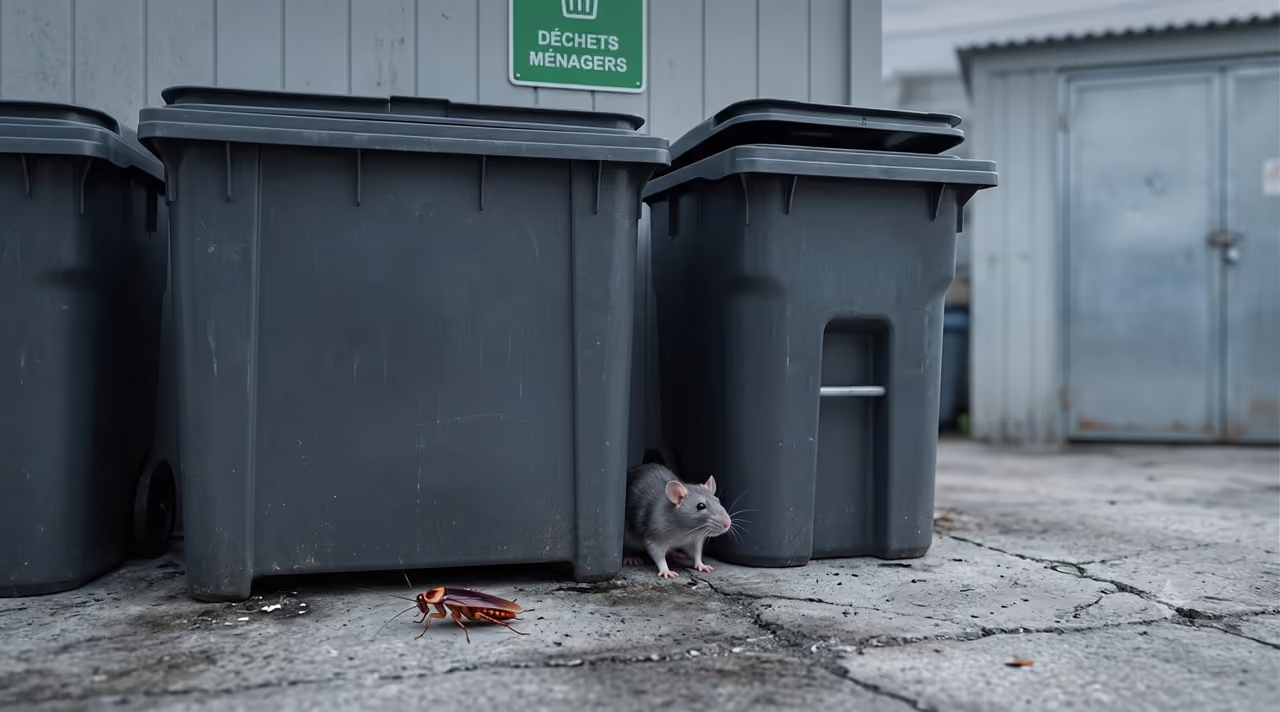
Rats in the bin room, cockroaches in the boiler room, pigeons nesting on the roof: communal areas are the direct responsibility of the building manager. Under the Belgian Civil Code on co-ownership, the manager is obliged to preserve and maintain the communal areas in a state consistent with their intended use.
In the event of damage suffered by a co-owner (infestation, degradation), the manager's professional liability insurance may refuse to intervene if negligence is proven—that is, if the manager was informed of the problem and failed to take the necessary measures within a reasonable timeframe.

Unhappy co-owners and the mandate vote at the general meeting
A building manager (syndic) is appointed for a set term, renewable each year by a vote at the general meeting. Rats in the car park, pigeons fouling cars and balconies, bed bugs spreading for months without a coordinated solution: these situations fuel complaints, emails, and grievances at AGs. A building manager who cannot present a documented action plan with a history of interventions will not survive the vote.
Rodents in communal areas, pigeons on the roof, or bed bugs spreading between apartments?
Free and no-obligation

Why do apartment buildings face such high risks?
A Brussels apartment building brings together all the conditions that pests thrive in: a bin room fed by dozens of households, quiet cellars and car parks, a roof accessible to pigeons, and communal areas used daily by residents who may inadvertently bring pests in from outside.

Warm, damp, and supplied daily with organic waste by every household in the building.
Every move is a potential vector for introducing bed bugs or cockroaches, which are impossible to detect upon arrival.

Cellars, utility ducts, and false ceilings shared by all apartments create highways for pest propagation.
The most common pests in Brussels residential buildings
In co-ownership buildings, pests exploit both common areas and private spaces via the shared building structure. These three species account for the majority of reports we handle in buildings managed by Brussels property managers.
Rodents enter through external access points to reach the bin storage area, cellars, underground car park, and utility ducts.
Introduced by a new occupant or moving furniture, bed bugs spread from one apartment to another.
Pigeons acidify and degrade roofing materials, clog gutters, and soil facades.
Legal obligations of property managers regarding pests in co-ownership buildings
The Belgian Civil Code requires property managers to preserve and maintain common areas in a state consistent with their intended use. This obligation explicitly covers bin storage areas, cellars, car parks, corridors, lifts, and roofing. The documented presence of pests in these spaces, without an active treatment plan, constitutes a breach that may engage the property manager's civil liability.
Professional property managers accredited by the BIV are also subject to a code of ethics that requires the diligent management of the assets entrusted to them.
Does your building portfolio lack a structured pest control contract?
Bring your buildings into complianceOur pest control contract for Brussels property managers

Audit of common areas and roofing
We carry out a complete inspection of the building: bin storage areas, cellars and car parks, lifts, corridors and common areas, roofing and attics, technical ducts, and exterior access points.

Coordination of interventions
We define a simultaneous intervention protocol for bed bugs, communicated to occupants via the property manager. In case of emergency, we respond within 24 hours.

Reports for the Annual General Meeting
After each visit, a timestamped report is generated detailing inspected areas, products used, and results. Through our tracking software, the building's entire pest control file is accessible at any time.
Our mission is to free you from this distress
A structured contract, archived reports, and seamless coordination with occupants. You manage the mandate, we handle the pests.
I want a free, no-obligation assessmentCommon areas, roofing, and inter-apartment coordination: a single contract.
Your pest control history can be exported in one click for your next AGM.
Unmarked vehicles, plain clothing, and coordinated interventions to avoid unnecessary disruption in the building.
Pests reported: we intervene within 24 hours to stop the spread.
Don't just take our word for it

Excellent work for my home and workshop, I highly recommend them. Discreet and efficient.
Very satisfied with the treatment for cockroaches! The team arrived quickly and acted professionally. Every step was clearly explained to us, and the 6-week re-treatment guarantee included in the price gives us real peace of mind. A quality service that we recommend without hesitation!
We called Fix Nuisible in the morning, and they responded quickly that same day. The team carefully identified and sealed the potential entry points for the rats. Very friendly and professional, they provided a quality service at a very reasonable price. We highly recommend Fix Nuisible and would like to say a big thank you to Mr. Ertas for his excellent work!
Following a friend's recommendation, I called Mr. Ertas. He was very responsive and helpful. Our problem was resolved quickly and efficiently. I would recommend him without hesitation!
Fast service. Many thanks.
I contacted Fix Nuisible after finding rats in my basement. They came out the same day and solved my problem. I am incredibly grateful to them. Fast, efficient, and their rates are very affordable too. I would recommend this company without hesitation.
Manage your buildings without pests with a pest control contract dedicated to property managers
We will get back to you promptly to schedule an audit of your building or portfolio, provide you with a transparent quote per building, and define together a pest control contract that covers common areas, the roof, and inter-apartment coordination.


FAQ
The questions we are most frequently asked by professional property managers in Brussels before setting up a pest control contract for their portfolio of buildings.
Free, no-obligation quote
We will be in touch shortly to schedule an appointment, provide you with a transparent quote, and work together to define a monitoring plan tailored to your establishment.
Pest control specialists in Brussels.