
Pest control in Brussels co-ownerships
Fix Nuisible works in Brussels co-ownerships to treat infestations at their source. Cockroaches in plumbing stacks, rodents in cellars, and carpenter ants in the framework: these pests cannot be eliminated apartment by apartment. We establish a coordinated treatment plan covering all affected units and common areas, in liaison with the ACP, the volunteer building manager, or the co-owners directly.

When pests divide a co-ownership

An infested apartment that contaminates the entire building
Cockroaches move freely between apartments via shared plumbing stacks, tile joints, and service ducts. When one neighbour refuses treatment or is unaware they are infested, their apartment becomes a permanent source of recontamination for the entire building. Each individual treatment fails because the source is never neutralised.
In these situations, tensions between co-owners rise quickly. Everyone blames their neighbour. The co-ownership association (ACP) finds itself managing a conflict for which the Civil Code provides leverage, provided they have the documentation to use it.
A structural infestation that individual treatments cannot resolve
In older Brussels buildings, cockroaches do not just live in the apartments. They colonise construction voids, drainage stack joints, raised floors, and the interstitial spaces between floor slabs.
A building constructed before the 1970s with uninsulated plumbing stacks is structurally prone to permanent cockroach infestation. The only lasting solution is a treatment that reaches these refuge areas in all units simultaneously, using a protocol adapted to the building's architecture.

A blocked collective budget and co-owners who cannot agree
Initiating a collective treatment in a co-ownership requires owners to agree on funding and access to apartments. Some refuse to pay for a problem they believe originates "downstairs." Others refuse access to their homes. The general meeting can block or delay the decision while the infestation continues to spread.
An independent diagnostic report provided by a professional turns a dispute between neighbours into an objective technical decision.
Recurring cockroach issues, rodents in the cellar, or an ant problem within your building's structure?
Free and no-obligation

Why are older Brussels buildings structurally vulnerable?
Brussels has thousands of residential buildings constructed between 1880 and 1970, the original structures of which were never designed to withstand modern pests. Uninsulated plumbing stacks, construction voids between floor slabs, damp cellars with cracked joints, and untreated wooden frameworks are all conditions that encourage the long-term establishment of cockroaches, rodents, and ants.

The drainage stacks shared by all apartments in a single column act as a vertical highway for cockroaches to spread.
Older buildings create ideal conditions for carpenter ants and cockroaches, which settle in damp, out-of-reach areas.

Individual cellars grouped in a common space blur the lines between private and collective responsibilities: rodents and cockroaches move freely between the storage units.
Pests that settle in the very structure of your building
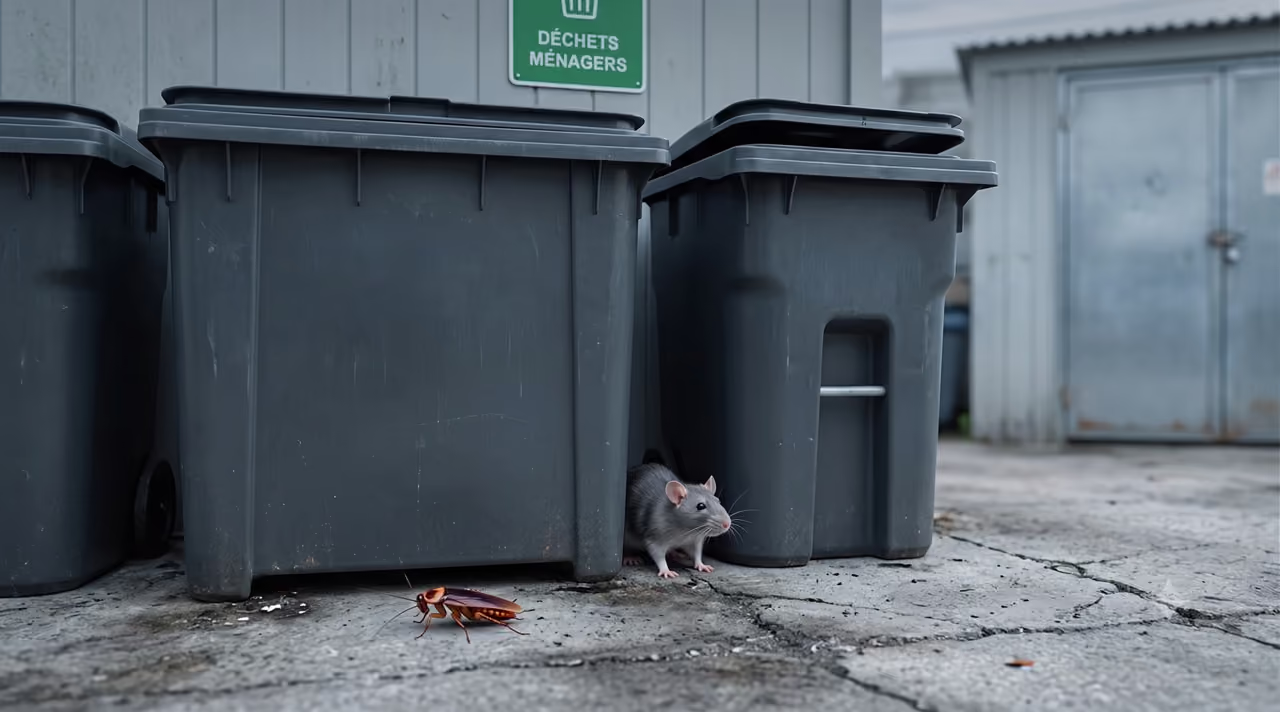
In an old Brussels building, pests do not just occupy apartments: they colonise the building's structure. These three species are the most frequently encountered during our interventions in Brussels co-ownership properties.
The German cockroach settles in the joints of plumbing stacks, construction voids, and interstitial spaces between floor slabs.
They occupy individual cellars and the common basement area, in a zone where the boundary between private and collective responsibility is not clear.
Carpenter ants settle in the wooden elements of old buildings: roof structures, beams, panelling, and damp woodwork.
Rights and obligations of co-owners regarding pests
The Belgian Civil Code requires every co-owner to maintain their private areas in a condition that does not cause harm to other occupants. If an infestation in a private apartment spreads to neighbouring units or common areas, the co-owners' association (ACP) can legally require the defaulting owner to take action. As a last resort, the justice of the peace may be petitioned to order treatment.
For common areas (cellars, ducts, corridors, basement), the ACP as a legal entity is directly responsible.
Recurring infestation that individual treatments haven't solved?
Get the source diagnosed by a professionalOur approach for Brussels co-ownerships: treat the source, not the symptoms

Shared diagnosis
Before any treatment, we carry out a full building inspection: common areas, cellars, service ducts, technical shafts, and reported apartments.

Coordinated treatment
We schedule interventions to take place simultaneously in all apartments identified as active sites and in the adjacent common areas.

Follow-up and documentation for the co-ownership association
Following the initial treatment, scheduled follow-up visits ensure there is no recontamination. A comprehensive report documents all treated areas.
Our mission is to free you from this distress
An independent diagnosis, a coordinated plan, and a building free from recurring issues. We treat the source, giving your co-owners peace of mind.
I want a free, no-obligation assessmentWe don't just inspect the reported apartments: we hunt for harbourage areas.
We provide the co-ownership association with the technical evidence needed to convince the co-owners.
Our coordinated multi-unit protocol eliminates both active infestations and harbourage areas simultaneously.
The assessment report and intervention records serve as usable evidence.
Don't just take our word for it

Excellent work for my home and workshop, I highly recommend them. Discreet and efficient.
Very satisfied with the treatment for cockroaches! The team arrived quickly and acted professionally. Every step was clearly explained to us, and the 6-week re-treatment guarantee included in the price gives us real peace of mind. A quality service that we recommend without hesitation!
We called Fix Nuisible in the morning, and they responded quickly that same day. The team carefully identified and sealed the potential entry points for the rats. Very friendly and professional, they provided a quality service at a very reasonable price. We highly recommend Fix Nuisible and would like to say a big thank you to Mr. Ertas for his excellent work!
Following a friend's recommendation, I called Mr. Ertas. He was very responsive and helpful. Our problem was resolved quickly and efficiently. I would recommend him without hesitation!
Fast service. Many thanks.
I contacted Fix Nuisible after finding rats in my basement. They came out the same day and solved my problem. I am incredibly grateful to them. Fast, efficient, and their rates are very affordable too. I would recommend this company without hesitation.
Treat the infestation at the source with a coordinated solution for the entire co-ownership
We will contact you shortly to schedule an assessment of your building, provide you with a report of the identified nests, and define a coordinated treatment plan together that is adapted to your building's structure and the situation between co-owners.


FAQ
The questions we are most frequently asked by co-owners and ACP members dealing with a recurring infestation in their building.
Free, no-obligation quote
We will be in touch shortly to schedule an appointment, provide you with a transparent quote, and work together to define a monitoring plan tailored to your establishment.
Pest control specialists in Brussels.